


Last week, as everyone else, I watched my ChatGPT subscription transform overnight. No warning. No choice. Just OpenAI deciding what intelligence I deserved for each query.
I felt cheated. What ? No more “O3” for advanced reasoning?
Until I realized that was exactly the point.
GPT-5 launched to a chorus of complaints. “It’s worse than before.” “They took away our choices.” “ChatGPT literally got dumber.” The rage was immediate and seemingly justified. OpenAI had forcibly migrated everyone to a “unified system” that experts felt like a downgrade.
But here’s the thing: OpenAI didn’t ship a failed model.
They shipped a business model.
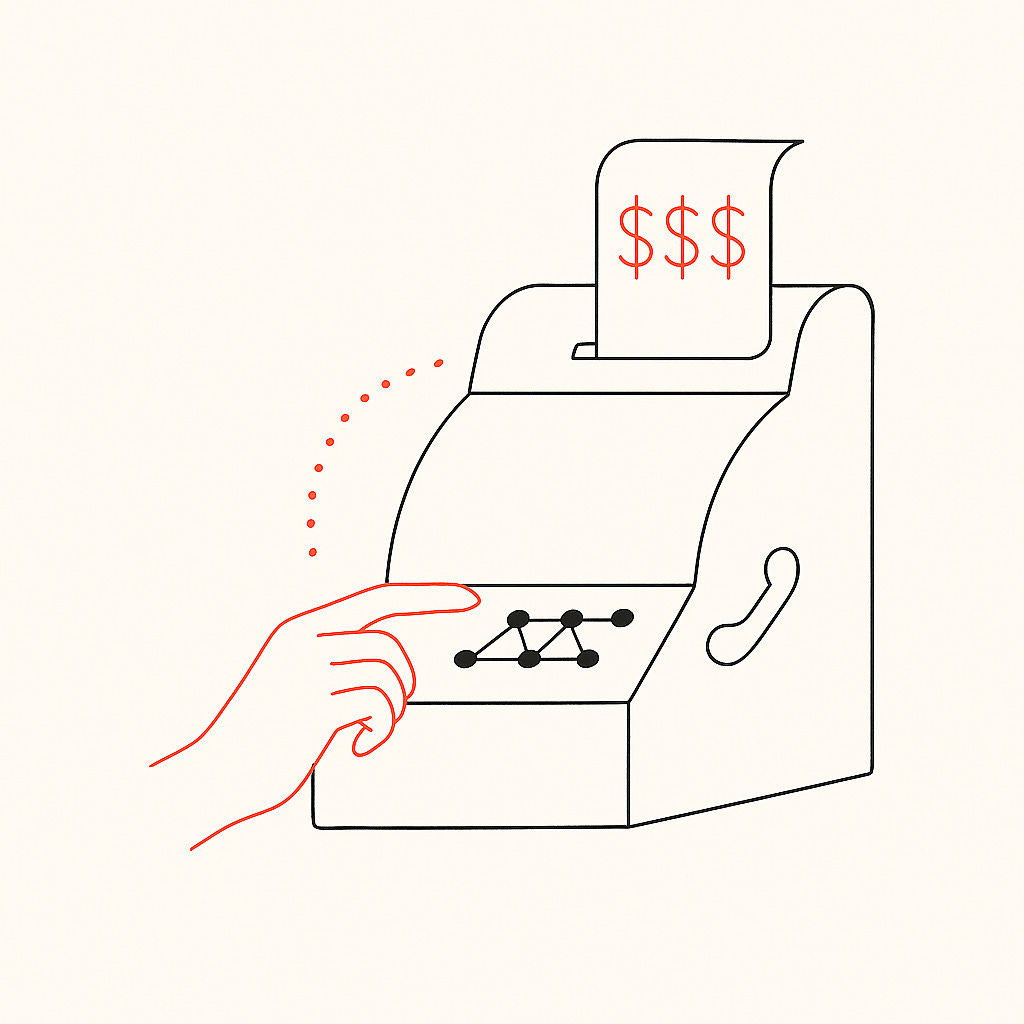
Behind GPT-5 sits a “router”—an invisible traffic controller that decides which AI model answers your question. Simple query? You get the cheap, fast model. Complex problem? You might get the expensive reasoning engine. You never see this happening. You just get an answer, without knowing if you received the Volkswagen or the Ferrari of AI responses.
And we’re teaching this router, query by query, how to put a price on human curiosity itself.
The Launch Experts Hated (For Good Reasons)
Pull the thread on GPT-5’s reception and you’ll find genuine grievances. Reddit threads with thousands of upvotes declare it “horrible.” Developers claim it’s worse at coding.
Until last week, ChatGPT Plus subscribers could manually choose between different AI models—GPT-4o for general tasks, o3/4 for complex reasoning. Like picking the right tool for the job. That choice vanished. The router decides for you. (NB: manual choice has been partially reinstated since then for plus users).
Here’s the kicker: 99% of free users and 93% of paid users never even knew they could access different models. They never clicked that dropdown menu. But for the power users who did? Losing that control felt like a betrayal.
The reasoning model—GPT-5’s “thinking” mode that shows its work step-by-step—was capped at 200 messages per week. Features vanished. Control evaporated. Just trust the router to decide what you need.
But while experts mourned their lost features, few noticed the infrastructure OpenAI gained.
In May, OpenAI hired Fidji Simo as head of consumer products. At Facebook, she figured out how to monetize mobile. She turned free scrolling into a behemoth advertising machine the only real competitor to Google in this market.
You don’t hire Facebook’s monetization architect to improve chat responses. You hire her to build toll booths.
The Economics of “Free” Intelligence
OpenAI is hemorrhaging money. Not just on training—that’s the headline everyone knows. The real killer is inference, the cost of actually answering your question. Like a restaurant losing money on every free sample.
ChatGPT has 700 million users, mostly free. When someone asks GPT-4 to write a haiku about their cat, OpenAI might spend $0.05 to generate something worth nothing. Multiply that waste by hundreds of millions of daily queries. It’s like burning hundred-dollar bills to light cigarettes.
The router solves this with algorithmic elegance. Simple question? Tiny model, microscopic cost. Complex problem? Reasoning model, worth the investment.
“What’s the capital of France?” That’s GPT-5 mini territory. Cost: maybe $0.0001.
“Help me plan a week in Provence with a €1,000 budget, considering my wheat allergy and love of medieval architecture?” Now you’re triggering the reasoning model—multiple tool calls, web searches, calculations. Cost: potentially $1 or more.
But here’s where it gets interesting: “I need an attorney specialized in international commerce to review these new tariff implications.” That query might trigger $10, even $50 worth of compute. And more importantly, it signals commercial intent worth hundreds of times that.
It’s cost optimization disguised as product improvement. Genius.
And honestly? This makes sense. Less compute means less energy consumption. If my cat haiku doesn’t need a nuclear power plant’s worth of processing, that’s good for everyone. The planet included.
Why only OpenAI Can Pull This off
Building a router is incredibly hard—and that’s OpenAI’s moat.
You can’t just run another AI to classify if a request is simple or complex. That would mean running two models for every query, doubling your costs and defeating the entire purpose. This requires old-school machine learning, trained on massive datasets of user behavior patterns.
Think about what OpenAI knows that nobody else does: When do users regenerate responses? When do they switch models manually? When do they express satisfaction? When do they abandon conversations? Every interaction teaches the router what queries need what level of intelligence.
ChatGPT went from outside the top 100 websites to number 5 globally in eighteen months. That’s 700 million users generating billions of queries. A smaller competitor might see a thousand tax attorney queries per month. OpenAI sees millions.
This volume creates a flywheel: better routing leads to better outcomes leads to more users leads to smarter routing. The moat compounds daily.
Smaller players could never accumulate enough training data. Even if they could, they lack the diverse query types that teach a router when to deploy expensive reasoning versus cheap recall. You need queries in 50 languages, from students to CEOs, from poetry to particle physics.
The router isn’t just infrastructure. It’s a moat built from our collective curiosity that nobody else can replicate.
Your Thoughts Are Being Priced
But cost savings is just the first layer. The router isn’t really routing to models—it’s routing to price points.
Obviously, a lawyer request is worth more than a toothbrush query. Google has known this for twenty years—that’s why buying “tax attorney” costs $50 per click while “funny cat videos” costs nothing.
But here’s what’s different: Google only sees the search term. OpenAI sees the entire conversation. The context. The follow-ups. The way you phrase things when you’re serious versus curious.
Traditional search engines guess intent from keywords. OpenAI knows intent because you’re literally explaining what you want, why you want it, and what you plan to do with it.
As Doug O’Laughlin and colleagues noted in their analysis, users are providing “hundreds of words of rich context when interacting with AI assistants” rather than just keywords.
Consider the three stages unfolding:
Three Stages of Intent Capture
Stage 1 (Now): Recognition —The router identifies commercial value based on phrasing, context, and follow-up patterns. “Plan my Tokyo trip” gets different compute than “What’s Japan’s capital?”
Stage 2 (2026?): Facilitation —AI completes transactions within the conversation: “Book it.” “Buy this.” No external click needed.
Stage 3 (2027?): Anticipation —The system predicts needs before they’re voiced. You mention stress → router allocates compute for therapy apps, budget tools, sleep aids.
The Smart User’s Playbook
Here’s the practical reality: this router system is probably good for most of us, most of the time. But you can hack it when you need to.
Get Better Answers Now:
Add “think step by step” or “think hard about this” to trigger reasoning mode
Load context upfront: “I need a thorough analysis for my board presentation” beats “analyze this”
When simple answers fail, your follow-up naturally triggers better compute
For critical queries, be explicit: “I need your most detailed analysis”
The system responds to intent signals. Use them wisely.
Who Owns Your Intent?
The router is smart infrastructure. It makes AI more sustainable, more accessible, and economically viable.
But are you ready to hand over all your intentions?
Today, the router just picks which model answers you.
Tomorrow, it could shape what you ask in the first place.
You mention feeling tired, and suddenly the conversation steers toward sleep aids. You express frustration, and mental health apps appear.
The risk isn't that AI reads our intentions—it's that it might create intentions that weren't there before. How do we ensure the router amplifies our genuine needs rather than manufacturing new ones?
How do we prevent our curiosity from being not just priced, but directed?
When Facebook's algorithm learned to maximize engagement, it didn't just show us what we wanted—it changed what we wanted. It turned casual browsers into addicts. What happens when that same logic controls our access to intelligence itself?
GPT-5 isn't getting dumber. It's getting more precise about what intelligence you can afford. The moment we stop noticing that our curiosity is being priced, that's when we've truly become the product.
The Intelligence Fabric - Unweaving AI's impact on how we work, think, and relate. For leaders ready to shape their AI future.
References
¹ O’Laughlin, D., Patel, D., Zhou, W., & Kourabi, A. (2025, August 13). “GPT-5 Set the Stage for Ad Monetization and the SuperApp.” SemiAnalysis.
² Wengert, E., & Escher, J. (2025, February 25). “Forget the attention economy. Prepare for the intention economy.” Fast Company.
³ University of Cambridge (2024, October). “Coming AI-driven economy will sell your decisions before you take them, researchers warn.” Harvard Data Science Review.
⁴ Langlais, P.C. (2025, February 1). “The Model is the Product.” Vintage Data.
A fairly accurate assessment.
We thought we were getting smarter AI, but OpenAI's real innovation is building a hidden marketplace for cognition. What unsettles me most is how the router will inevitably reshape what questions we even think to ask, turning curiosity into a monetizable input before we realize it.