


More than 80% of organizations say they will hire for AI governance roles this year. Every prediction talks about autonomous systems acting on your behalf. Few mention the documentation those systems require.
The blocker isn’t the technology. It’s trust.
The Trust Stack
What does trusting AI actually mean?
It means trusting the entire chain, The Trust Stack:
Input: What data went in? Was it clean? Complete?
Model: Which version? What was it trained on? When was it last validated?
Process: What workflow? What guardrails? What checks?
Output: What did we do with it? Was there a review?
And at each step, if there is a human, who was it and why did they make their choice. If there was no human, did it make sense and who chose to approve this absence.
Trust means being able to answer these questions. The only way to answer them is documentation.
On top of that, GenAI is a particularly difficult animal. Traditional software is deterministic. Same input, same output. You can reproduce bugs. You can prove behavior.
GenAI isn’t like that. Run the same prompt twice, get different results. The model is stochastic.
That’s the problem.
Trust requires repeatability, but GenAI can’t repeat. This changes everything about building trust in tech.
With traditional software, you inspect the code. Bug happens, you reproduce it, you trace the logic, you fix it. With GenAI, you can’t reproduce. The error might never happen again—or it might happen differently next time.
So you inspect the log. You archive the conversation. The log becomes the only proof that something happened at all.
Without the log, you’re arguing about ghosts.
Documentation is the only way to debug, discuss, or defend what the AI did. The conversation archive isn’t overhead, it’s evidence.
When I deploy AI agents, 99% of the challenge isn’t the tech, it’s the governance. Finding who’s in charge. Finding who approves. Finding what happens if it goes wrong.
The answer is paperwork.
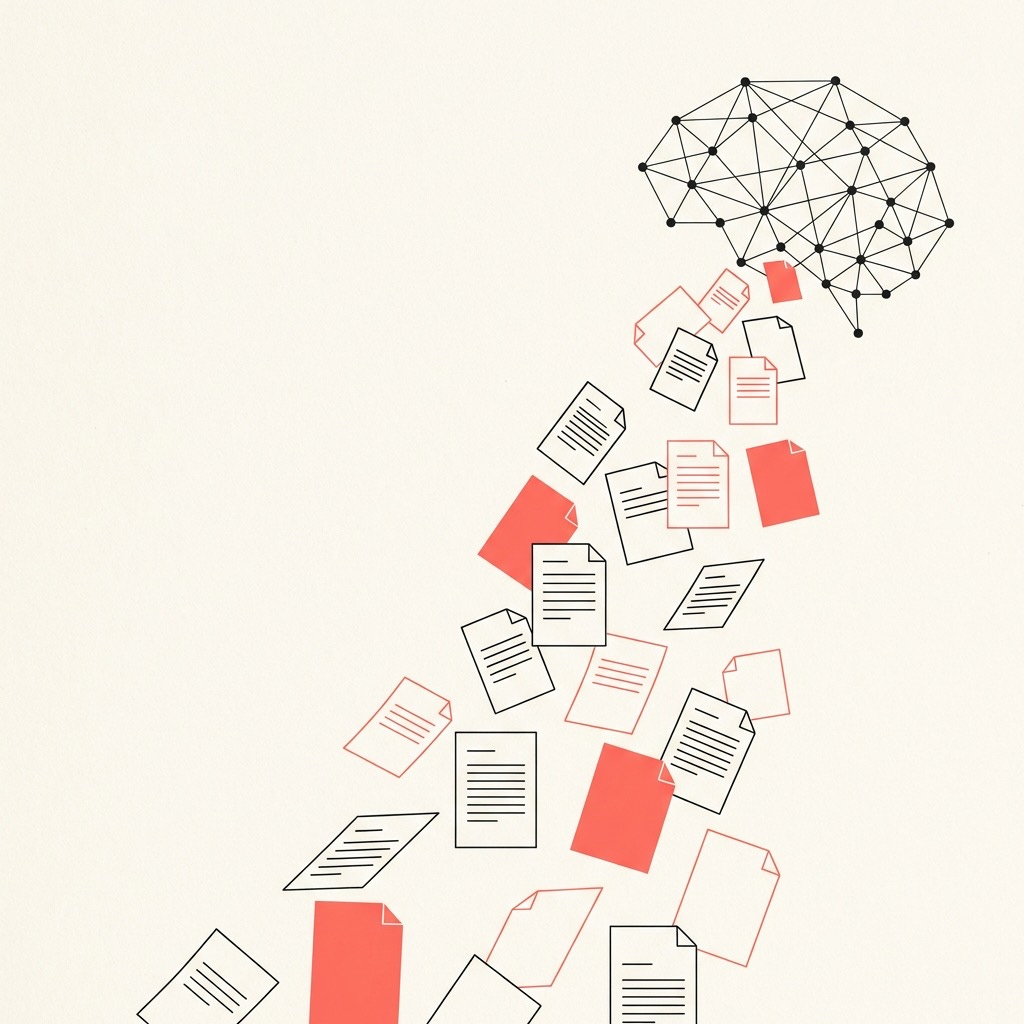
Regulation and Liability Are the Forcing Functions
The paperwork isn’t coming. It’s already written into law.
Beginning August 2, 2026, the EU AI Act requires high-risk AI systems to “enable the automatic recording of events (‘logs’) over the lifetime of the system.” Not guidance. Not best practice. Mandatory. Deployers must keep logs for a minimum of six months. Before you can place a system on the market, you need complete technical documentation: system specifications, version control, design rationale, algorithms, quality metrics, post-market monitoring plans.
And it’s not just Europe. Colorado requires documentation of bias testing and mitigation for “consequential decisions” starting February 1, 2026—covering employment, education, healthcare, housing, insurance, legal services. California mandates AI inventories documenting every tool’s purpose, inputs, and decision impact.
Gartner projects that by year-end, half the world’s governments will enforce similar requirements.
The regulatory net is tightening globally, simultaneously.
Then there’s liability. Traditional insurers are excluding AI from coverage entirely. Too unpredictable, too hard to assess. Specialty carriers at Lloyd’s now offer products covering “hallucinations” and “degrading model performance”.
Vendors have noticed. They’re competing on indemnity and audit capabilities now, not model performance. The pitch isn’t “our AI is smarter.” It’s “our AI is defensible.”
The new question is “who gets sued when it’s wrong?” Answer: whoever can’t prove their process was sound. Proof requires paper.
Healthcare shows where regulatory and liability pressures converge. Agentic AI systems capture clinical reasoning in real-time during patient encounters, shifting from passive transcription to active audit defense. Any AI system making these decisions in the EU triggers full Article 11 and 12 compliance. The result: verification, evidence gathering, submission, human attestation. For now, this is Augmented Bureaucracy—AI that creates more process
And it’s coming to every industry where AI makes consequential decisions.
However, there is light at the end of the tunnel. Organizations that solve documentation first with clean audit trails, clear approval workflows, defensible decision logs will be able to deploy AI where others can’t. Call it The Governance Moat.
The Future Looks Like Paperwork
Fewer than 10% of AI pilots make it to production. Governance friction is a key barrier.
But the few firms achieving growth from AI share a trait: they treat governance as strategy, not overhead. They don’t ask “how do we minimize documentation?” They ask “how do we design documentation that accelerates us?”
“Teams moved faster when boundaries were clear.”
We thought we were going to the future. We ended up back at the form.
This isn’t AI failing. It’s AI getting serious.
Are you building governance that creates trust, or governance that performs it?