

AI is Impressive. So Why Does No One Care?
Silicon Valley is obsessed with engineering “wow” moments. But for the rest of the world, a “super-smart” AI that can’t handle basic arithmetic isn’t a miracle, it’s a distraction

I keep meeting people who don’t “get” Gen AI.
These aren’t Luddites. They are leaders who understand the tech’s trajectory, or decision-makers who have ChatGPT or Gemini pinned to their homescreen.
They nod at the capabilities. They acknowledge the progress. Then they go back to Google, Outlook or Powerpoint. To the way they’ve always worked.
Mustafa Suleyman, Microsoft’s AI CEO, tweeted his genuine confusion: “The fact that people are unimpressed that we can have a fluent conversation with a super smart AI that can generate any image/video is mindblowing to me.”
Suleyman grew up playing Snake on a Nokia. Now he oversees machines that write Python and generate 4K video. How could anyone not be impressed?
I found the answer he’s missing. It’s not that users are ungrateful.
It’s that the industry is trading in the wrong currency.
The Currency Mismatch
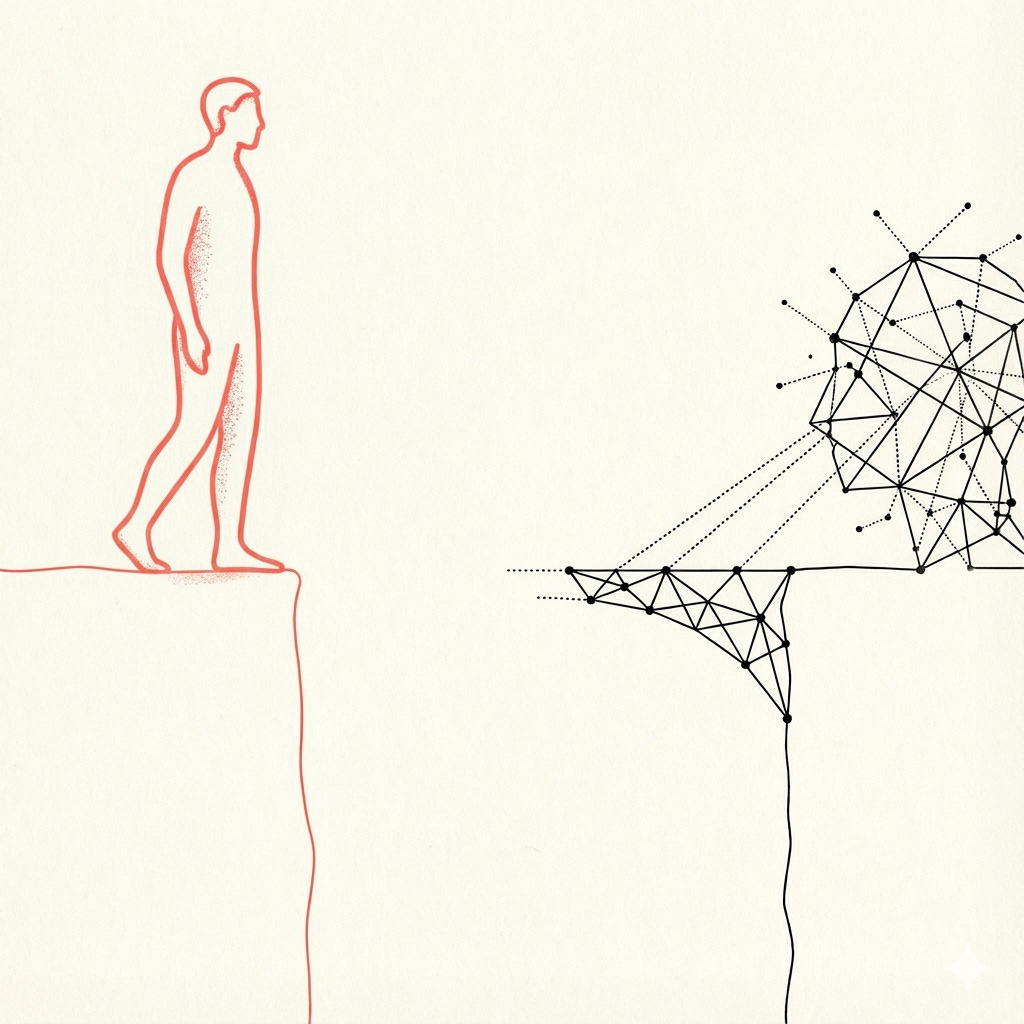
The tech industry is obsessed with Impressive. The rest of the world only cares about Convincing.
Impressive looks backward. It compares the tool to what came before. It’s the delta between GPT3.5 and GPT-4o. It’s an engineering metric.
Convincing looks sideways. It compares the tool to what I’m using right now. Does this work better than my current solution? Is it more reliable than a junior analyst? Does it solve a problem I actually have?
The gap between these two explains why AI is currently winning the labs but losing the office.
The pushback to Suleyman’s tweet told the real story. One user spent 20 minutes trying to get Copilot to generate a simple Excel list of Terry Pratchett books. It failed, then gave them links they could have Googled in three seconds.
Google Home automation that worked perfectly for years now responds “sweet dreams” when you say “good night” but doesn’t turn off the lights.
GameFAQs, a 30-year-old plain text forums apparently still beats AI for finding game walkthroughs.
In every case, older, simpler, and reliable wins. As one commenter put it: “It would be like trying to sell me on my power drill having a conversation with me.”
Nobody asked for a chatty drill.
They asked for holes in the wall.
The “Impressive Demo” Death Spiral
The very thing that makes AI exciting is what’s killing its adoption: its generality.
A lot of knowledge workers still don’t use LLMs for work. Only about 5% of ChatGPT users pay for premium tiers. Why? Because most people don’t have the “time to figure out how to save time.”
Technology adoption research confirms it: when introduced to new technology, people reference familiar systems to understand its purpose.
That first impression locks in the category.
This creates what I call the Impressive Demo Death Spiral:
The Flashy Pitch: AI is marketed with “creative” demos : making art, writing poems, or generating videos of Sam Altman riding a horse on the moon.
The Toy Categorization: The user’s brain files AI under “Creative Toy” or “Entertainment.”
The Cognitive Lock: When that same user needs to perform a strategic analysis, they don’t think of the “Poem Tool.”
The Low Adoption Trap: Companies see low engagement in “useful” features and double down on even flashier demos to get attention.
The Executive Dismissal: Leaders watch the flashy demos, feel unimpressed, and conclude AI is overhyped — missing the real opportunity entirely.
“A tool that can ‘do anything’ effectively communicates that it does nothing in particular.”
What “Convinced” Users Actually Do
Perplexity recently analyzed hundreds of millions of AI agent interactions . Not chatbot queries, but actual autonomous actions like organizing emails, editing documents, and booking travel.
The data shows that convinced users aren’t doing impressive things. They’re doing boring things.
Specificity Wins: The most common tasks were granular: “filter emails,” “summarize research,” “edit documents.” Even with general-purpose agents capable of anything, users gravitated toward bounded, repeatable workflows.
The Utility Migration: Users who stick with AI agents gradually move away from “chatting” and toward “thinking-heavy” productivity tasks (research, document workflows, career development).
The 57% Rule: More than half of all agent actions fell into “Productivity and Workflow.” Not image generation. Not creative writing. Not the demos.
The executives dismissing AI aren’t wrong about the demos. They’re looking at the wrong map. Flashy demos are underwhelming for real work by design, they prioritize the “wow” over the “how.”
Finding Your “Snake” Game
The Nokia Snake game did exactly one thing, perfectly, every time. You knew what it was for the second you saw it.
That clarity is what’s missing from AI.
If you’ve watched a demo and felt unimpressed, you haven’t made a mistake. You’ve seen through the marketing. The mistake is stopping there, concluding that because the demos don’t convince you, the technology has nothing to offer.
The real opportunity isn’t in finding a machine that can do everything. It’s in identifying the specific, boring tasks where “80% good enough, 10x faster” changes the game.
Where is the “Snake” game hiding in your organization?
Information Triage: Is the team drowning in 60-page PDFs? This is where AI agents show the highest adoption, not because it’s impressive, but because it’s genuinely faster.
Mechanical Workflows: Which tasks involve reformatting data, editing documents, or version management? The Perplexity data shows document workflows as a top use case.
Research Compression: Where is the gap between a question and an informed decision currently costing you days? This is the “thinking-heavy” work where convinced users increasingly deploy AI.
The right question isn’t “Is this model impressive?”
The right question is: “Does this drill make the hole?”
References
Michael Kan, “Microsoft Exec Asks: Why Aren’t More People Impressed With AI?”, PCMag, November 19, 2025
Reddit discussion: Microsoft AI CEO pushes back against critics, r/Windows11
Towards Data Science, “The AI Productivity Paradox”, 2024
Frontiers in AI, “Technology acceptance model and AI”, 2024
Perplexity, “How People Use AI Agents”, 2025
Appcues, “Feature Adoption Guide”, 2025
This hits a nerve. AI is impressive, but impressiveness fades fast when it doesn’t connect to intention. People don’t care about capability in isolation — they care about relevance to their own context, problems, and identity. The gap isn’t technical, it’s human. AI becomes meaningful only when it stops performing and starts participating in real workflows and real decisions.
This is about a style of collaborative AI: how co-writing our stories in dialogue is more human-shaped, expansive, and more meaningful, rather than extractive.
https://substack.com/@dsakakura/note/p-182980277?r=2c01ak&utm_medium=ios&utm_source=notes-share-action